
Bleher’s Discus: the Monography
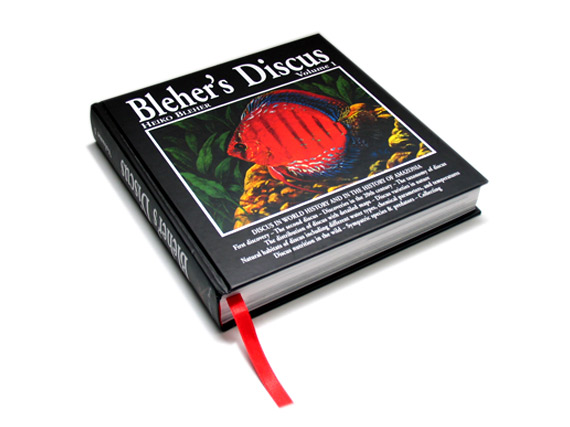
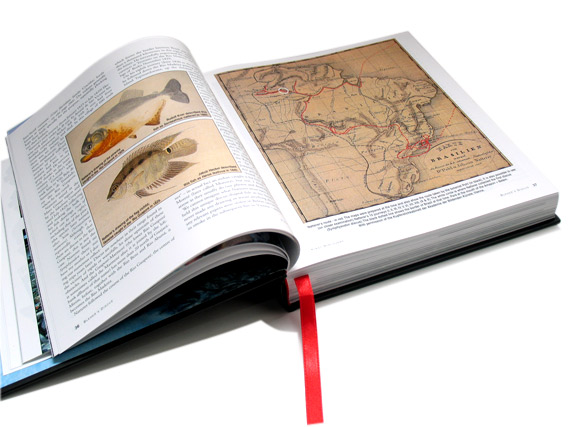
Whether it was the Emperor Napoleon or Prince von Metternich who was responsible for the original discovery of the discus is something the reader himself must decide, but the rest of this more than 1200 pages work – brought in two parts – is far from ambivalent.
VOLUME I
with about 5000 photos, paintings, drawings
and around 50 maps:
In the first chapters Heiko Bleher guides you through the centuries through more than 150 years of discovery, documented in finest detail. He brings to life all the scientists who have worked on the genus – with in part unpublished work and photos – and, after almost half a century of debate regarding the systematics, provides a new and easy-to-understand summary of the taxonomy.
The distribution of the genus and the individual species is shown practically down to the smallest igarape or lago, on eight double-page maps. For the first time with precise details of water colour, researched in the field.
again with around 5000 photos,
paintings and drawings:


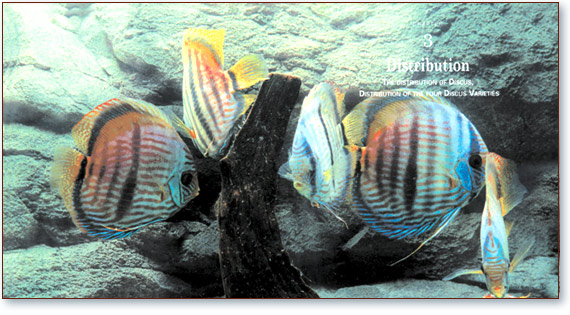
In the fourth chapter Bleher covers all the wild forms known to date (some hitherto unpublished) and their colour variants, in words and photos – the results of his more than 300 research and collecting expeditions. The locality data have been extensively checked in the field over the years up to 2005.
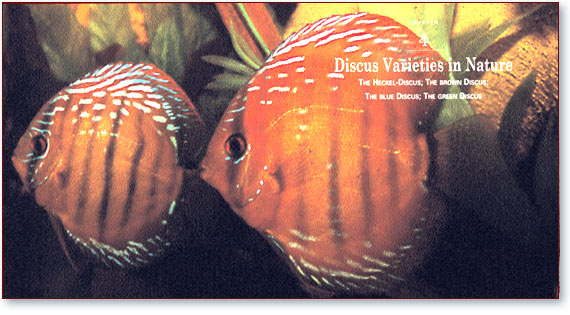
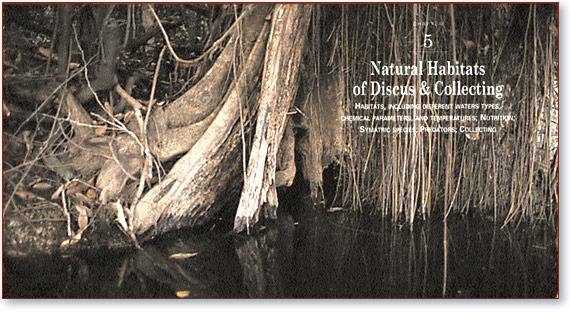
In Chapter 5 he guides the reader through the history of Amazonia – back to the time of its discovery – and tells extensively about the early history of the regions and the numerous indian tribes (mainly personal experiences among the aboriginals). In addition the natural habitats of the discus are described and illustrated, with water parameters (measured by both day and night) given for 75 different locations; almost every major water in Amazonia is mentioned at length, with details of which form(s) do or do not occur there; and places that remain unexplored to date are listed.
He also details extensively – over 80 pages – the diet of the discus in nature, the communities of which it forms part and its enemies, as well as the various methods of capture used from the beginning to the present day.
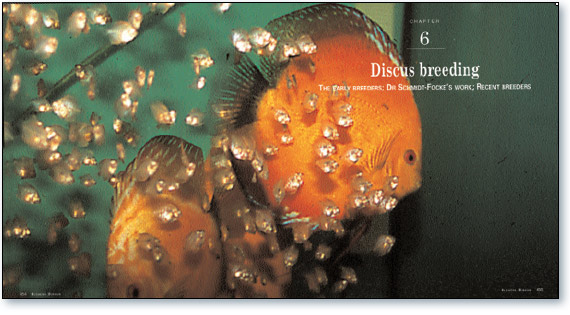
Chapter 6 covers the very first breeders, their work and experiences; Schmidt-Focke’s work (to date partially unpublished); and – at length – the breeders of the last 50 years all around the world, including their (breeding) secrets. And the most famous recent breeders from 4 continents: America, Asia, Australia and Europe – including such places as Uzbekistan; Ukraine, Philippines, Brazil, etc.
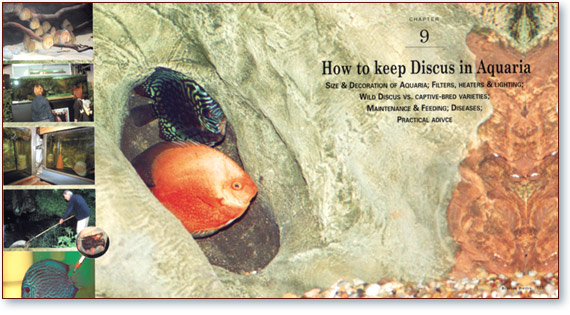
In the seventh chapter he discusses the captive-bred variants from four continents and the latest colour “fads” – again from all four continents. The eight chapter tells of the beginnings of discus classification for aquarium hobby purposes and the initial judging at international championships. The latter are extensively described and illustrated – championships from all countries were they have taken place, up to the most recent ones in the Czech Republic – with information on the various judging methods worldwide. In conclusion Bleher emphasises the need for uniform judging globally and gives the guide lines to do so.Suggestions for optimal aquarium maintenance – true to nature and biotope, about decoration, filters, heaters, lightning, quarantaine, Wild discus vs. captive-bred varieties, diseases and practical advice, and much more – are given in Chapter 9, based on the author’s almost 50 years of experience.

evaluated.
And in conclusion, discus clubs, the Internet, and discus products are covered at some length.
Bleher Discus is much more than a book about Discus…it is a book for everyone! For those who love nature, for those who are interested in real and fully updated history of Amazon River, for the scientist, limnologists, taxologists or ittiologists and teachers, biologists or zoologists, nature photographers or simply fish lovers.
In this book you can find more than just a simple description of Discus species, but also a great wealth of new animals that no one has never seen before.
Publication autorized by the autor. All rights are reserved ® Aquapress

| Maschio o femmina? La differenza si vede. | DiamondSnake x LeopardSkin.¿Como seran los pequeños? |
| Maschio o femmina? La differenza si vede. | |
| DiamondSnake x LeopardSkin.¿Como seran los pequeños? |